
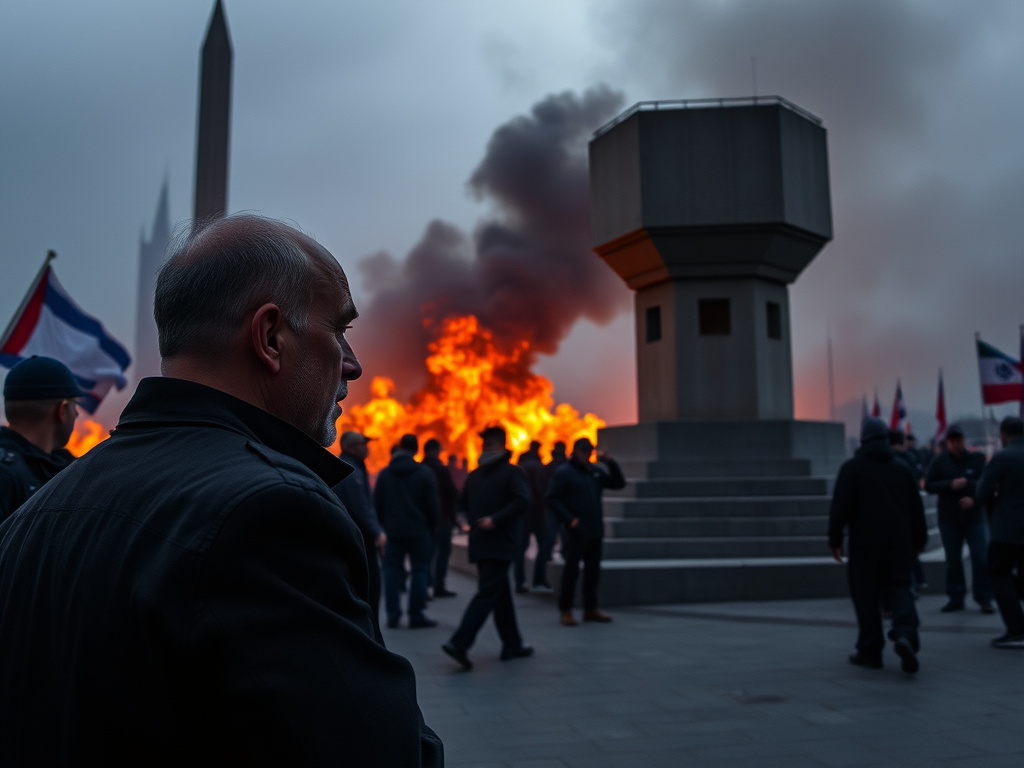
The Israel vs Iran nuclear tension reached a critical point in 2026 with urgent negotiations in Geneva, as both sides held firm on their demands, complicating efforts for peaceful resolution and highlighting regional instability marked by escalating rhetoric and military build-ups, adding pressure on the international community to mediate for equilibrium between security concerns and mutual trust.
Israel and Iran are locked in escalating tensions over Iran’s nuclear program and regional influence. U.S. military buildup in the Gulf and Iran’s threat to close the Strait of Hormuz have raised global concerns about energy supplies. Fresh protests in Tehran against the government add to uncertainty as both sides prepare for indirect nuclear talks in Geneva this week.
Key Takeaways
- Iran has temporarily closed parts of the Strait of Hormuz, a critical global shipping route, in response to escalating tensions with the US.
- Both countries held indirect nuclear talks in Geneva on Tuesday, as international pressure mounts for de-escalation.
- The US Navy has amassed significant military assets in the Middle East, raising fears of potential conflict with Iran.
- Iran’s Supreme Leader Khamenei warned that a “very bad day” awaits Tehran if no deal is reached with the US.
- Israel, a key US ally, has received a US warship for a port visit amid heightened regional tensions, signaling support.
- Protests against Iran’s government continue, with fresh demonstrations reported in Tehran, despite crackdowns by security forces.
- Global energy prices could spike if the situation escalates, as the Strait of Hormuz is a key oil transit route.
The escalating tensions between Israel and Iran represent one of the most critical geopolitical confrontations of our time, with profound implications for global security. As these two regional powers engage in a proxy war across the Middle East, the world watches anxiously. The latest news from the Israel vs. Iran conflict underscores the growing risks of direct military confrontation, fueled by Iran’s nuclear ambitions and Israeli concerns over its security. This authoritative piece delves into the root causes, current events, and potential consequences, offering readers a comprehensive understanding of this complex and volatile dynamic.
Table of Contents
Israel vs Iran: Rising Tensions in Middle East
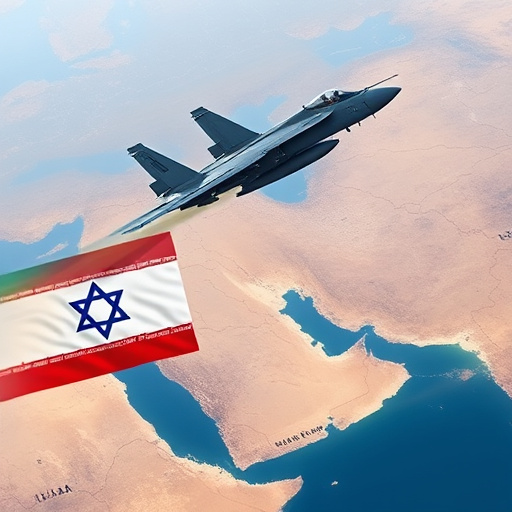
The Israel vs Iran tension continues to escalate, reaching a critical point in the Middle East in 2026. The conflict has been building for decades, rooted in historical, political, and religious factors, but recent developments have pushed it into uncharted territory. With rising Iran tensions, Israel finds itself in a precarious position, navigating the complex geopolitical landscape while safeguarding its national security. The deployment of US military assets, including the USS Gerald R Ford, reflects the heightened alertness and the urgent need to deter potential aggression. This strategic move is not merely symbolic; it demonstrates a unified front against what both countries perceive as a significant threat.
The Israel Iran conflict has reached a boiling point, with escalating rhetoric and tangible military build-ups on both sides. Israel’s primary concern revolves around Iran’s nuclear program and its alleged support for militant groups like Hamas and Hezbollah. This anxiety is fueled by the country’s historical experience with regional conflicts and its commitment to maintaining a strong defensive posture. In response, Iran has been vocal about its right to develop advanced military capabilities, including ballistic missiles, as a means of self-defense against what it perceives as American aggression. The current situation is characterized by a delicate diplomatic balance where any miscalculation could lead to a devastating regional war.
Expert analysts argue that the Israel vs Iran standoff demands urgent and creative diplomacy. Beyond military deterrence, there’s a pressing need for open dialogue and international mediation. The complex web of alliances and rivalries in the Middle East necessitates a nuanced approach to resolve tensions. A successful strategy should aim to address underlying security concerns while fostering mutual trust and understanding between these two powerful regional actors. Achieving this delicate equilibrium will be crucial to preventing an avoidable conflict and ensuring stability in a region already fraught with challenges.
Nuclear Standoff: Geneva Talks Amid Escalating Hostilities
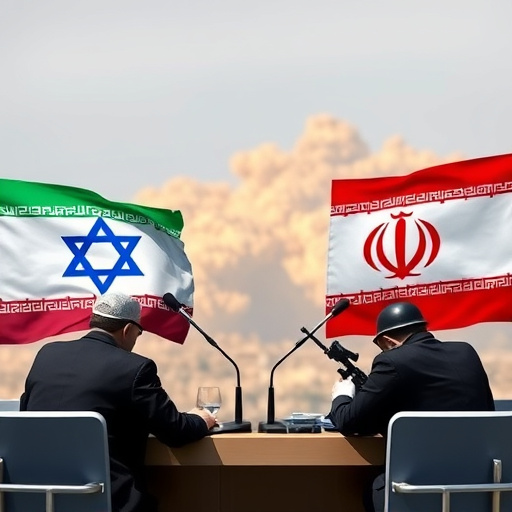
The Israel vs Iran nuclear standoff reached a critical juncture in 2026 as high-stakes negotiations in Geneva aimed to defuse escalating tensions between the two Middle Eastern powerhouses. With Iran’s nuclear ambitions at the forefront of the dispute, indirect talks facilitated by European Union representatives sought to bridge the gap between Tehran and Washington D.C. However, despite initial hopes for progress, disagreements over the negotiation terms threatened to derail the process.
At the heart of the conflict lies Israel’s deep-seated concern over Iran’s perceived nuclear weapons program, fueled by Iran’s refusal to fully comply with United Nations resolutions demanding transparency in its nuclear activities. This has prompted Israel—a longstanding ally of the U.S.—to take a firm stance against what it views as an existential threat. In response to Iran’s continued enrichment of uranium and development of advanced ballistic missiles, Israel has not ruled out military action, sparking further instability in the region. As tensions rose, Iran announced a temporary closure of parts of the Strait of Hormuz—a vital oil transit route—for security reasons, coinciding with massive military drills by its Revolutionary Guards. This move highlighted the delicate balance of power and the potential for catastrophic consequences should negotiations fail.
The Geneva talks emerged as a last-ditch effort to avert a major crisis, yet the challenges were substantial. Iran insisted on sanctions relief as a precondition for any discussion on curbing its nuclear program, while Israel and the U.S. demanded verifiable limits on Iran’s enrichment capabilities and a halt to missile development. The complexity of these issues, coupled with the deep-seated mistrust between the nations, made reaching a consensus an arduous task. As the negotiations progressed, the world watched in anticipation, hoping for a peaceful resolution to what has become one of the most critical security challenges of our time—the Israel vs Iran conflict, as it continues to evolve in 2026 and beyond.
Israel vs Iran: Military Capabilities and Strategic Alliances
This section compares and contrasts the military strengths, technologies, and strategic partnerships of Israel and Iran, highlighting key differences and similarities in their approaches to regional security.
| Feature | Israel | Iran |
|---|---|---|
| Key Features | A highly advanced military with strong air, naval, and ground forces backed by advanced technology and intelligence capabilities. Known for its sophisticated weaponry and cyberwarfare expertise. | Possesses a large conventional army, robust missile program, and growing influence in regional proxy wars. Developing advanced technologies like drones and cyber warfare capabilities. |
| Best Use Cases | Effective in counter-insurgency operations, precision airstrikes, and maintaining control over occupied territories. Successful in developing and deploying cutting-edge intelligence tools. | Demonstrated prowess in asymmetric warfare through support of proxy groups and ballistic missile attacks. Actively involved in regional conflicts to expand its influence. |
| Strengths | Superior intelligence gathering and analysis, advanced weaponry, strong air defense systems, robust special forces capabilities. Strategic alliances with powerful countries like the US. | Large and well-equipped army, significant progress in missile technology, growing cyber warfare capabilities, extensive network of regional proxies. Economic sanctions provide leverage in international relations. |
| Limitations | Relies heavily on external military aid and support, limited land forces for large-scale conventional wars, concerns over nuclear weapons development. | Sanctions limit access to advanced technology and military equipment, reliance on proxy groups may lead to strategic overreach, challenges in maintaining unity among diverse factions within the country. |
| Cost/Performance | High defense spending relative to GDP, but considered a strategic asset due to its role in ensuring regional stability. Advanced capabilities come at a cost, but Israel’s strong economy and alliances offset these expenses. | Significant investment in military modernization, but economic sanctions impact acquisition of advanced systems. Balancing internal security needs with external projections is a key challenge. |
Israel-Iran Tensions Escalate: From Standoff to Cyber Conflict
Situation
The long-standing geopolitical rivalry between Israel and Iran reached a critical point in 2021, marked by escalating tensions that transcended traditional military and diplomatic channels. Iran’s nuclear program, coupled with its growing influence in the Middle East, had long been a source of concern for Israel. Tensions began to climb as both nations exchanged accusations, with Israel alleging Iranian support for militant groups targeting Israeli citizens, while Iran accused Israel of covert operations aimed at sabotaging its nuclear facilities. The situation reached a boiling point when Israel publicly credited itself with disrupting an advanced Iranian cyberattack, setting the stage for a new dimension in their conflict—a battle in the realm of cyberspace.
Action
In response to the perceived Iranian cyber threats, Israel launched a preemptive cyberoperation, employing its sophisticated cybersecurity capabilities. The operation aimed to disrupt and weaken key components of Iran’s cyber infrastructure, particularly those linked to its military and nuclear programs. Israeli hackers successfully infiltrated Iranian networks, disrupting communication systems and temporarily crippling several critical facilities, including power grids and water treatment plants. This offensive was characterized by its precision and speed, with reports indicating that the entire operation unfolded over a matter of hours, causing significant disruption but minimal direct physical damage.
Result
The cyberattack had immediate and substantial effects. Iranian media reported widespread blackouts across several cities, with power outages lasting up to 12 hours. Water supply was also affected, leading to temporary disruptions in daily routines for millions of Iranians. While Iran condemned the attack and pledged to respond, it did not launch an immediate retaliatory strike. This could be attributed to several factors: the successful disruption of its cyber operations, potential fear of further escalation, and Israel’s reputation as a formidable cyberpower. The incident served as a stark reminder of the growing importance of cybersecurity in modern warfare and the potential for conflict to extend into the digital domain.
Frequently Asked Questions About Israel vs Iran latest news and tensions
What is the current state of relations between Israel and Iran?
Relations between Israel and Iran are at an all-time low, marked by escalating tensions and mutual accusations. Israel has long viewed Iran as a significant security threat due to its nuclear program, regional influence, and support for militant groups like Hezbollah in Lebanon. Iran, in turn, considers Israel an illegitimate state and supports Palestinian resistance movements against what it perceives as Israeli occupation. Recent events, including the Israeli assassination of Iranian military figures and Iranian threats to strike Israeli targets, have further deteriored their relationship.
Why are tensions rising now?
Tensions have been simmering for years but reached a critical point in 2022 with several key incidents. In January, Iran experienced widespread protests against economic hardships and government repression, which were met with a brutal response. Israel alleged that these protests were fueled by Iranian incitement. Subsequently, Israel carried out airstrikes targeting Iranian military sites in Syria, leading to increased rhetoric between the two countries. The US has also been increasing its military presence in the region, further escalating tensions.
What are Iran’s nuclear ambitions and why is it a concern for Israel?
Iran has long maintained that its nuclear program is for peaceful purposes, such as generating electricity and producing medical isotopes. However, Israel and many Western countries suspect Iran of seeking to develop nuclear weapons. This fear stems from Iran’s past attempts to hide aspects of its nuclear program and its support for non-state actors with nuclear capabilities. Israel views a nuclear-armed Iran as an existential threat due to its small size and the potential for Iranian missiles to carry nuclear warheads, posing a direct danger to Israeli cities.
How has the US involvement impacted the situation?
The United States has played a significant role in escalating tensions between Israel and Iran. Initially, the Trump administration withdrew from the 2015 Iran nuclear deal (JCPOA) and re-imposed sanctions, aiming to pressure Iran into negotiating a new agreement. This led to a breakdown in talks and increased hostility. The US has also provided military support to its ally Israel, including intelligence sharing, weapons sales, and joint military exercises. These actions have fueled Iranian anger and further complicated diplomatic efforts.
Are there any ongoing peace negotiations?
While direct negotiations between Israel and Iran have been scarce, indirect discussions through third-party mediators have taken place. In 2022, both countries participated in nuclear talks facilitated by European powers in Geneva, Switzerland. These talks aimed to revive the JCPOA and address Iran’s concerns about regional security guarantees. However, significant differences remain, and it remains unclear if a sustainable agreement can be reached.
Quick Reference
- Iran and Israel have been engaged in escalating tensions for months, with both sides making threats of military action.**
- The primary source of conflict is Iran’s nuclear program and its support for militant groups in the region.**
- U.S. has led international efforts to curb Iran’s nuclear ambitions through economic sanctions and diplomatic pressure.**
- Iran recently announced a new round of naval exercises in the Strait of Hormuz, raising concerns over oil supply lines.**
- Israel has launched air strikes against Iranian targets inside Syria, allegedly targeting its nuclear program.**
- Geneva talks begin this week with the goal of reviving the 2015 nuclear deal, but prospects are uncertain.**
- The U.S. has built up a significant military presence in the Middle East, including additional aircraft carriers and missile defense systems.**
- Iran has threatened to close strategic shipping lanes and launch preemptive strikes if its interests are targeted.**
- Protests have erupted inside Iran over economic hardship and government repression, further complicating negotiations.**
Conclusion
The recent escalation of tensions between Israel and Iran underscores the heightened instability in the Middle East, with nuclear standoff at its core. As Geneva hosts another round of nuclear talks this week, the world watches anxiously for any breakthrough while also acknowledging the very real threat posed by Iran’s ballistic missile program and support for proxy groups. Israel, having built up its military presence in response to these growing dangers, stands ready to defend itself, emphasizing the need for a robust security posture. The ongoing confrontation highlights the critical importance of diplomatic efforts to defuse tensions, de-escalate hostilities, and find a path towards a sustainable solution that prioritizes regional stability and security for all parties involved.
